The quiet emergency under the floor: how residential leak detection found the leak before the homeowner did
Hidden water lines, slab leaks and slow drips behind walls cost U.S. homeowners billions every year. Inside the residential leak-detection industry — from listening sticks to thermal imaging — and what a professional visit actually finds.
By Marcus Ojo, Technology Correspondent · · 11 min read
The first sign is usually the bill. A homeowner in a quiet suburb opens a water statement three times the normal amount, walks the house, finds nothing wet, and calls the utility in suspicion before anyone thinks to call a plumber. By then the leak has been running for weeks — a slow seep under a slab, a hairline crack in a wall line, a joint weeping behind a finished basement — and the damage is already compounding. Residential leak detection is the business of finding that failure before it becomes a renovation. It is one of the fastest-growing specialties in the plumbing trade, and the public-health and conservation stakes behind it are the reason we cover household water loss on our Water & Wellness desk.
The U.S. Environmental Protection Agency estimates that household leaks waste roughly one trillion gallons of water nationwide each year — enough to supply more than eleven million homes. The average residential leak, left unaddressed, can waste ten thousand gallons in a single year. Most of that water never reaches a drain. It sits in a wall cavity, pools under a foundation, or travels along a joist until it finds a place to rot. The residential leak-detection industry exists because water is cheap until it isn’t, and because the cheap part hides the expensive part for months at a time.
The residential leak detection industry and its growth
The category was practically invented by one company. American Leak Detection was founded in 1974 in Palm Springs, California, by Dick Rennick, a former police officer and plumber who built electronic listening equipment to find pool and spa leaks without tearing up concrete. The franchise network that grew from that workshop is now the largest leak-detection company in the country, with locations across the United States and a service menu that has expanded from pools to whole-home plumbing, slab leaks, and municipal line work. Its longevity is the clearest signal that the residential market is not a niche — it is a permanent cost center for homeowners, and the technology that serves it keeps getting sharper. We track the tools driving that shift on our Technology & Innovation desk.
Growth has accelerated for three reasons. The U.S. housing stock is old — the median owner-occupied home is over forty years, and much of its supply piping is approaching end of life. Water rates have risen faster than inflation in most major metros, which turns a slow leak into a visible expense quickly. And insurers, burned by a decade of rising water-damage claims, increasingly require documentation and mitigation before they will renew a policy on an older property. The result is a trade specialty that barely existed a generation ago and now employs thousands of technicians nationwide.
The leaks homeowners actually face
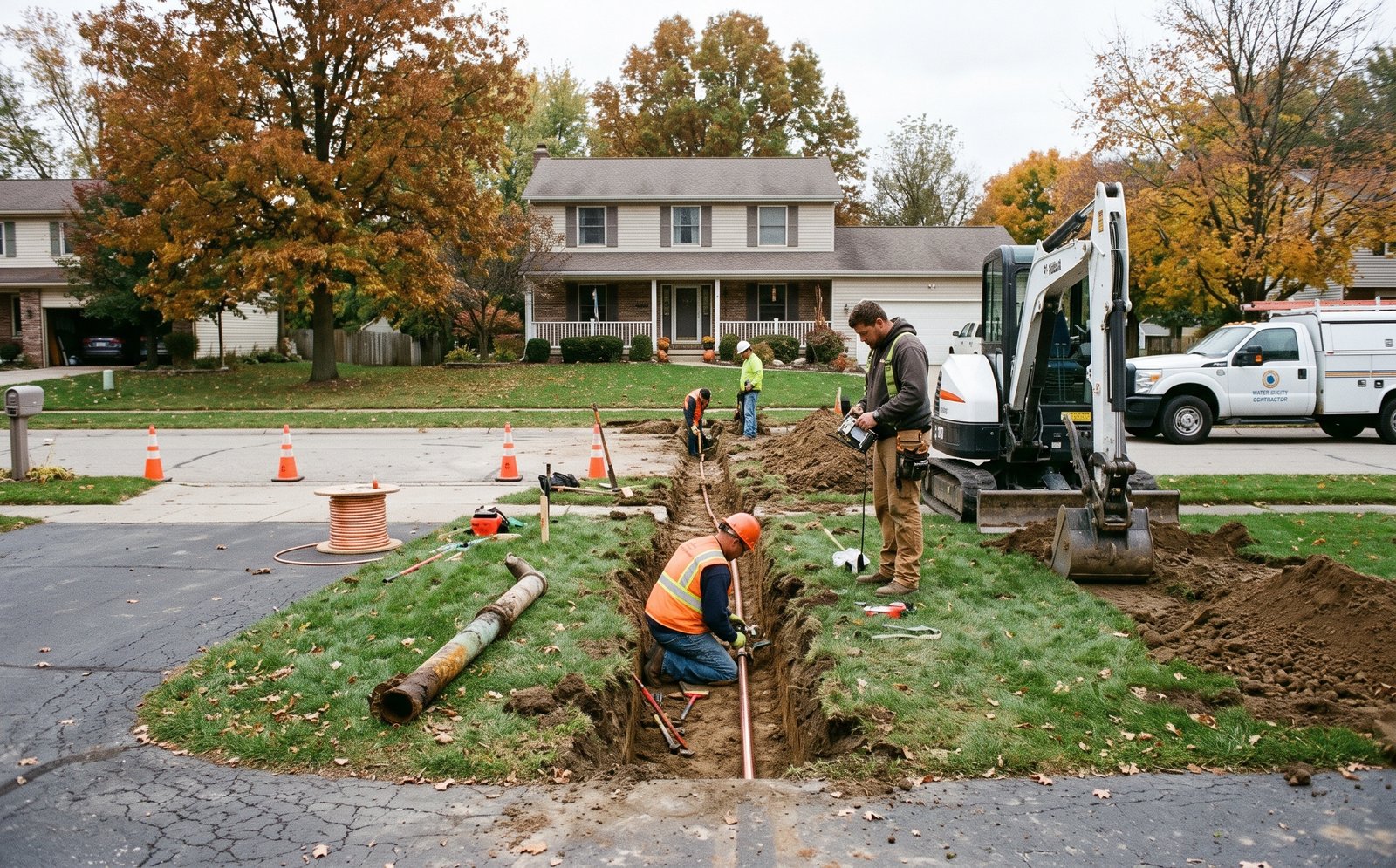
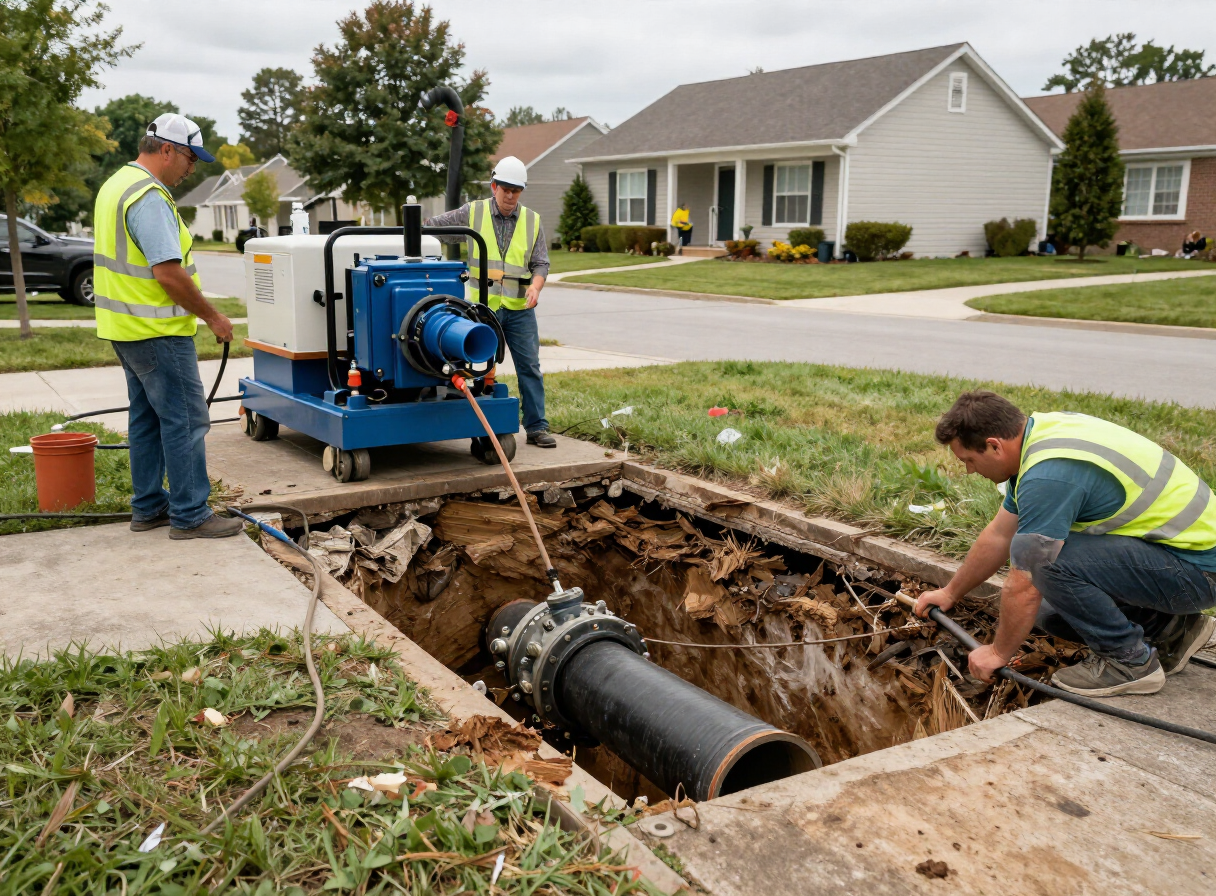
Residential leaks fall into a handful of patterns, and the pattern usually dictates the method. Hidden water lines — supply piping run through walls, floors, and ceilings — fail at joints, at pinhole corrosion sites in copper, and at splits in aging polybutylene or galvanized steel. Slab leaks, a subset, run under or through a concrete foundation and are among the most expensive a homeowner will face: the water has nowhere to go but up through the slab, and the repair often requires tunneling or breaking concrete. We examined the buried-pipe problem at the municipal scale in The hidden grid beneath your street is older than the road above, and the residential slab leak is its private-side mirror.
Foundation leaks arrive from the outside in — hydrostatic pressure pushing groundwater through a foundation wall or a floor slab, often misread as a plumbing leak until a detection visit rules the supply system out. Wall leaks hide behind tile, cabinetry, and finished basements, traveling along plates and studs until they surface feet from the source. Attic leaks, common in cold-climate homes, come from condensation on cold supply lines or from a failing ice-maker feed, and they can soak insulation for a season before a ceiling stain appears. Each of these is invisible to the eye and obvious to the right instrument.
How residential leak detection technology works
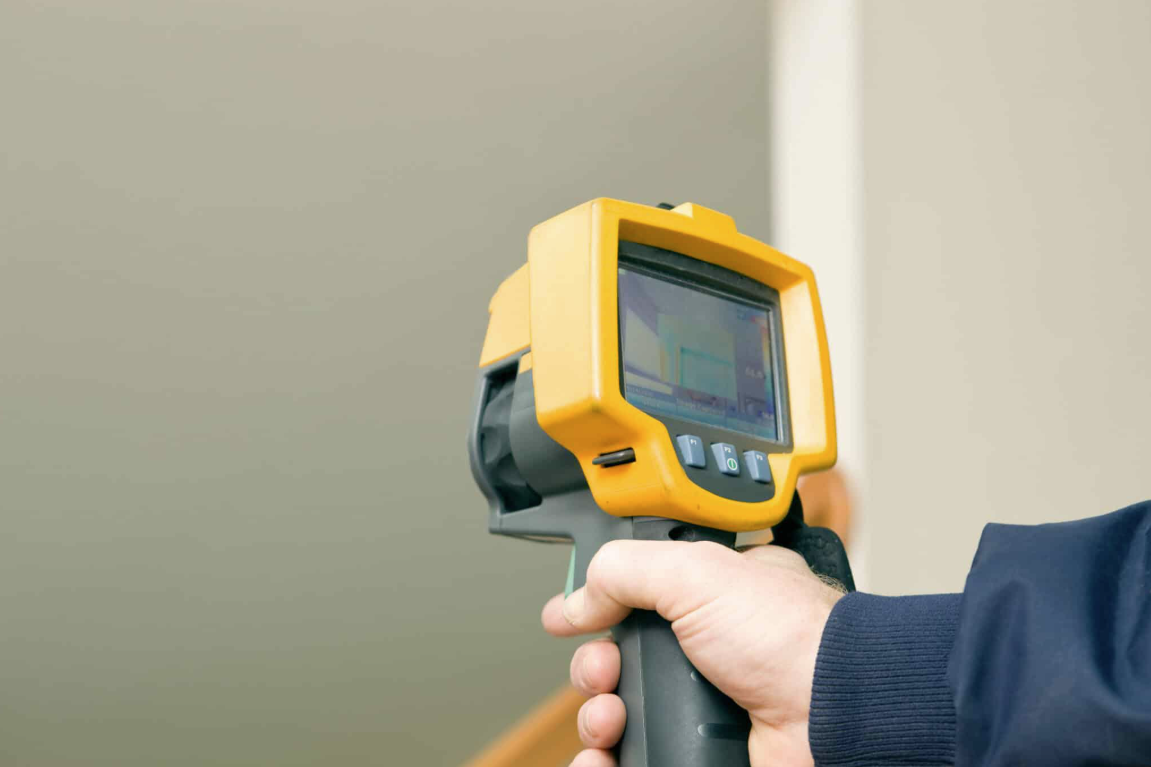
The core tool is still acoustic. A pressurized leak generates sound as water escapes through an opening, and that sound travels along the pipe wall and radiates into surrounding material. A technician with a ground microphone or a contact sensor walks the line, listens, and triangulates. For longer runs, an acoustic correlator places two sensors on exposed points of the same pipe and calculates the leak position from the time difference of the same signal arriving at each — the same physics utilities have used on mains for fifty years, now packaged for a living room. Thermal imaging cameras map temperature differences across a wall or slab, revealing wet insulation and cold-spray patterns that the eye cannot see. Tracer gas — typically a nitrogen-hydrogen mix injected into an emptied line — escapes only at the leak and is sniffed out at the surface with a gas detector, a method American Leak Detection popularized for difficult slab cases. Moisture meters and borescopes confirm what the other instruments suggest, turning a suspicion into a located point before a single tile is lifted.
We don’t guess and we don’t tear up the floor to find out. The equipment tells us where to open the wall, and we open four inches, not four feet.
Veteran leak-detection technician, Southern California
DIY detection versus professional services
Homeowners can do useful triage. The meter test — shutting off all fixtures and watching the water meter — tells you whether a leak exists somewhere on the property. The food-coloring toilet-dye test finds a leaking flapper. A flashlight under a sink and a hand on a wall catch the obvious. These methods are free, and they are worth doing monthly in an older home. What they cannot do is locate a leak behind a finished surface, under a slab, or inside a wall, and that is where the cost of guessing begins. A homeowner who opens a wall in the wrong place pays for the drywall, the tile, and the wasted day, and still has the leak.
A professional detection visit is the opposite of guessing. A trained technician arrives with the acoustic, thermal, and tracer-gas equipment to locate the leak to within inches, documents the finding with photos and a written report, and — critically — does so without demolition. The report is what the insurance adjuster wants, what the real-estate transaction needs, and what the repair plumber uses to quote a fixed scope. For homeowners ready to move from suspicion to a located leak, BestPlumbers.com connects property owners to professional leak detection services and to licensed plumbers who can carry the repair through to completion.
The cost of detection versus the cost of damage
The economics are lopsided and that is the whole pitch. A residential leak-detection visit typically runs from the low two hundreds to the mid five hundreds depending on region and complexity — a flat diagnostic fee for a located leak and a written report. The water damage that an undetected leak produces is measured in the thousands: a slab leak that undermines a foundation, a wall leak that ruins cabinetry and floors, an attic leak that collapses a ceiling. Remediation — water extraction, drying, mold abatement, reconstruction — routinely runs ten to thirty times the detection fee, and that is before the displaced-family hotel bill. The case for detection is the case for spending two hundred dollars to avoid spending twenty thousand, and the math only improves as water rates and construction costs rise. BestPlumbers.com publishes guidance on water damage prevention that frames the same trade-off from the prevention side.
Insurance implications
Homeowners insurance generally covers sudden and accidental water damage — a burst pipe — but is far less generous with slow, gradual leaks that develop over weeks or months, which many policies exclude as wear and tear or lack of maintenance. That distinction turns the detection report into a financial document. A dated, located-leak report can establish that a failure was sudden, support a claim, and satisfy an adjuster’s requirement for documentation. Without it, the homeowner is left arguing timing against an insurer that has every incentive to call the leak gradual. The policy and disclosure landscape behind these disputes is one we follow on our News desk, where codes, regulations, and coverage developments land first.
Water conservation and environmental impact
Every located residential leak is also a conservation win. The trillion gallons U.S. homes waste each year is not just a bill problem; it is treated, pumped, and chlorinated water that never served a purpose, and the energy embedded in it leaves a real carbon footprint. In drought-stressed regions of the West and Southwest, a single undetected slab leak can waste more water in a month than a household uses in a year of indoor use. Fixing leaks is, by a wide margin, the cheapest water supply a city can develop — cheaper than any new reservoir or desalination plant — and residential detection is the front line of that work. The conservation and water-quality dimensions of household water loss are the reason we keep a standing desk on Water & Wellness.
How to choose a leak detection company
Not every company that advertises leak detection actually specializes in it, and the difference matters. A detection specialist arrives with the right instruments and a written-report workflow; a general plumber may rely on demolition and guesswork, which costs the homeowner in unnecessary repairs. Look for a licensed, insured company that lists detection as a primary service rather than an add-on, that uses non-invasive methods, and that will provide references for similar work — slab leaks, wall leaks, pool leaks. Ask whether the detection fee is credited toward the repair if you use the same company, and whether the location is guaranteed. BestPlumbers.com maintains a plumbing directory searchable by city and specialty, which is the fastest way to find a detection specialist who already works your region.
Leak detection in home inspections and real estate transactions
The detection report has quietly become a real-estate document. In competitive markets buyers waive inspections at their peril, and a pre-purchase leak detection visit on an older home — especially one with a slab foundation, mature landscaping near the water service, or a history of polybutylene supply lines — can surface a thirty-thousand-dollar problem before closing rather than after. Sellers, similarly, are increasingly commissioning detection visits before listing to head off a contingency-period surprise. The transactional role of detection is one reason the specialty has grown alongside the inspection trade, and it is part of the broader contractor ecosystem we report on through our Contractors desk.
Case studies: the leak that almost wasn’t
A retired couple in Arizona noticed a warm spot on a hallway floor and a water bill that had crept up twenty percent over three months. A general plumber suggested rerouting the line at a cost of several thousand dollars and two days of drywall work. A detection visit located the leak — a pinhole in a copper line under the slab, six inches from the warm spot — in under two hours. The repair plumber opened a single tile, spliced the line, and was done by lunch. Total detection and repair cost was a fraction of the reroute estimate, and no drywall was touched.
In a second case, a homeowner in the Midwest heard a faint hiss behind a finished basement wall and assumed it was the water heater. The meter test confirmed a leak; a detection visit used tracer gas to locate a weeping joint behind a built-in bookshelf. The bookshelf was removed, the joint repaired, and the wall closed in an afternoon. Left alone, the leak would have saturated the stud bay within weeks and produced mold behind a surface no one could see. Both cases ended the same way: a located leak, a small repair, and a damage bill that never arrived.
The best call I get is the one where we found it early. The worst is the one where they waited, and now we’re drying the house.
Leak-detection franchise owner, Texas
The future of residential leak detection
The frontier is continuous monitoring at the whole-home scale. Smart water monitors that strap onto a meter or a main and learn a household’s usage pattern can flag an anomaly — a constant low flow at 3 a.m. — before any bill arrives, and some now pair with an automatic shutoff valve that closes the main the moment a burst is detected. The data these devices generate is the residential equivalent of the permanent monitoring now standard in commercial buildings, and it is moving the industry from find-the-leak to prevent-the-leak. The technology is not yet a substitute for a located-leak report when something is already wet, but it is narrowing the window in which a leak runs undetected from months to hours. Homeowners ready to act on a suspected leak — or to install monitoring before one starts — can find a plumber through BestPlumbers.com and move from suspicion to a fix in a single visit.
The cheapest leak is still the one you find before it damages anything. What has changed is that the instruments to find it are smaller, cheaper, and more precise than the generation that built American Leak Detection half a century ago — and the homeowner no longer has to choose between guessing and tearing up the floor. The residential leak-detection trade has turned a hidden emergency into a located problem, and a located problem is a solvable one.
Sources
- American Leak Detection company history and service documentation, reviewed by the author
- U.S. Environmental Protection Agency WaterSense program, household leak statistics
- Interviews with residential leak-detection technicians and franchise operators
- Published literature on acoustic correlation, thermal imaging, and tracer-gas leak location methods
- Insurance industry guidance on sudden versus gradual water-damage claims
Reported for Best Plumbers News. Code, safety and health guidance varies by jurisdiction and changes over time. Confirm requirements with your local authority and a licensed professional.
Sample CMS data. Stories, quotes and figures below are invented for design demonstration.
About the author
Technology Correspondent
Marcus reports on sensors, software and automation in the mechanical trades. He spent six years as a controls technician before moving to journalism.