The hidden grid beneath your street is older than the road above
Two point two million miles of drinking water pipe carry the country through an ordinary Tuesday. The people who keep it whole rarely get to explain what that takes.
By Dana Whitfield, Senior Editor, Infrastructure · · 18 min read
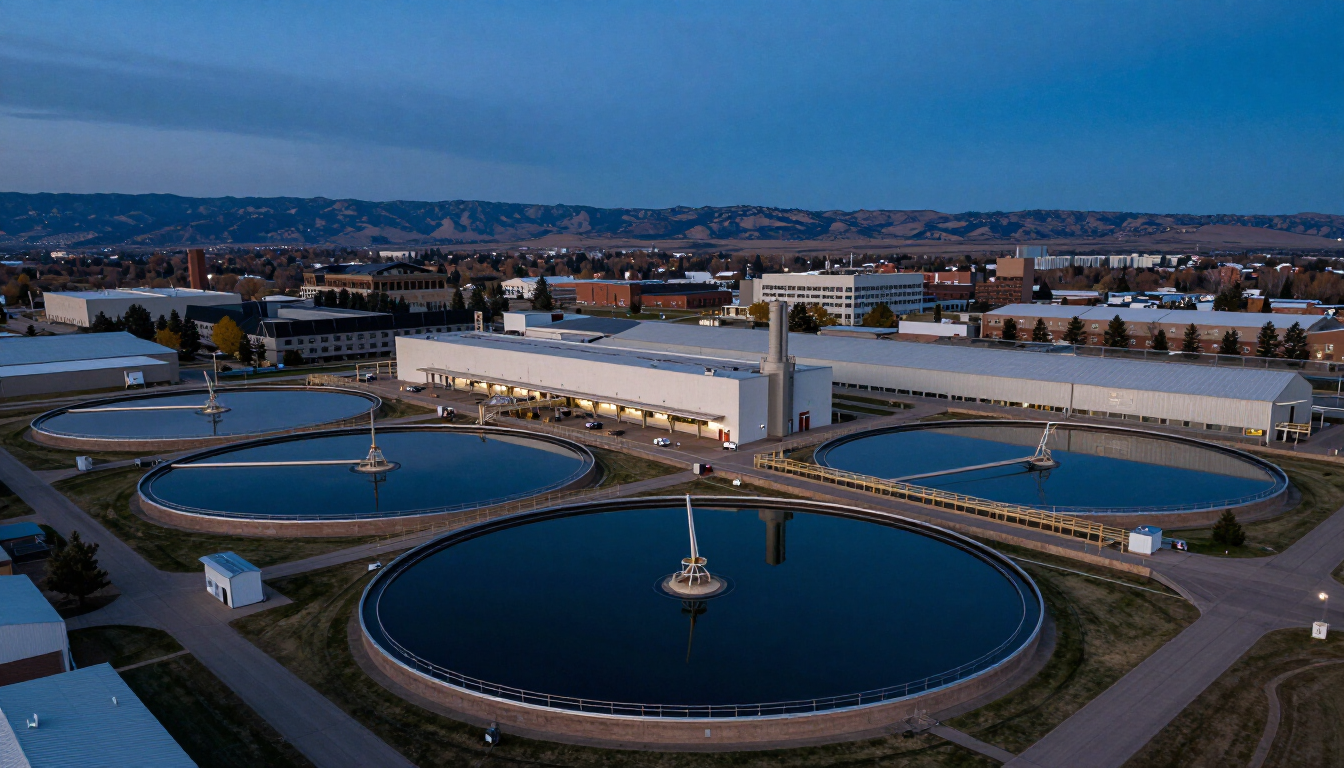
At 4:40 in the morning, a distribution operator named Ellis Nagy watches a pressure curve flatten on a screen the size of a dinner plate. Nothing dramatic happens. That is the point. A flat curve at dawn means several hundred thousand showers will run without anyone thinking about them, and a city of four hundred thousand will start its day without once naming the people who made that possible.
Drinking water reaches American homes through roughly 2.2 million miles of pipe, according to the American Society of Civil Engineers — enough buried conduit to wrap the planet nearly ninety times. A large share of it was laid before the interstate highway system, and some of it before electric refrigeration. Renewing it is not one project. It is thousands of small ones, negotiated street by street, and almost all of them depend on licensed plumbing and pipefitting crews. We track the policy, science and public-health angles of that work on our Water & Wellness desk.
Why the work is invisible by design
Successful water infrastructure produces no experience at all. Turn the tap, water falls, no one writes a thank-you note. That absence shapes how the work gets funded. Utilities compete for attention against visible assets — a new library, a repaved arterial — and a replaced main looks identical, from the surface, to the one it replaced. A commissioner can cut a ribbon on a fire station. A commissioner cannot cut a ribbon on six blocks of ductile iron that will sit undisturbed for a century.
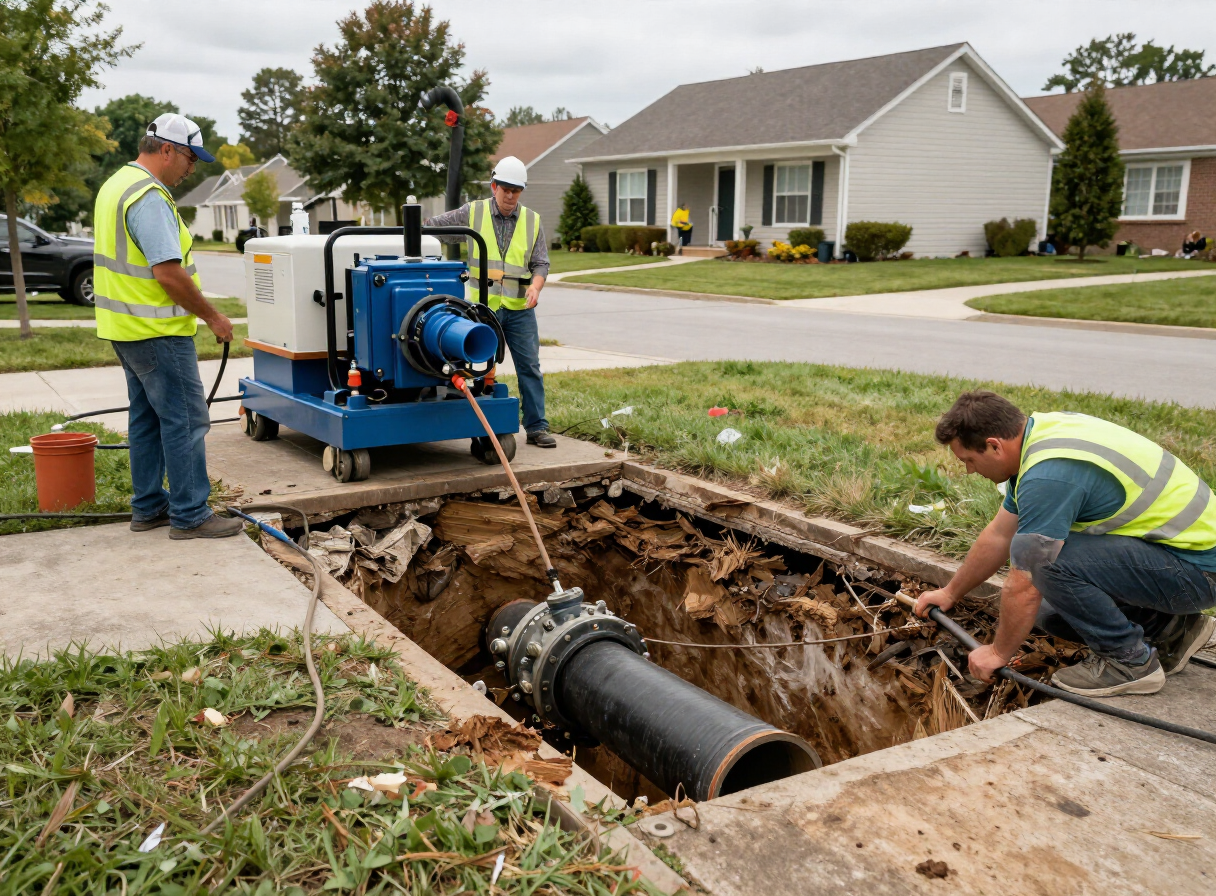
The invisibility is engineered, not accidental. Pressure is held steady by a hierarchy of pumps and valves that absorb the shock of every toilet flush and every fire hydrant opening. When the system works, the only evidence of it is the absence of evidence. When it fails, a sinkhole swallows a sedan and the grid becomes, briefly, the lead story.
You only ever hear about us on the worst day of the year. The other 364 are the actual job.
Ellis Nagy, distribution operator
A grid laid before the interstate
The pipe under your street is almost certainly older than the road above it. Cast iron mains installed in the 1880s still carry water in parts of Philadelphia, Louisville and New Orleans. Lead service lines — the small-diameter connector between the main and the home — were standard practice into the mid-twentieth century and remain in place for an estimated nine million properties nationwide. Replacing them is now a federal mandate with a deadline, and the licensed pipe repair and service-line work that follows is one of the largest plumbing campaigns in the country’s history. We are following the regulatory and rollout developments on our News desk.
Material age tells you something, but not everything. A cast iron main in wet, acidic soil may fail at sixty years. The same pipe in dry, alkaline ground can reach a hundred and twenty. Utilities now combine break histories, soil chemistry and acoustic condition assessments to rank which blocks get dug first — a data-driven triage that replaces the older habit of waiting for a rupture.
The labor question underneath the capital question
Money is arriving through federal and state revolving funds, and through the lead service line replacement programs attached to them. Crews are the constraint. Contractors interviewed for this story described bidding fewer jobs than they could win, because they could not staff them. Apprenticeship pipelines have expanded, but the training cycle for a competent service plumber runs four to five years, and a competent distribution crew chief longer than that. As we reported in apprentice pay is the recruiting story nobody puts in the brochure, the programs that publish a year-by-year wage progression are the ones filling seats.
What follows from that is a simple, uncomfortable point. The country can fund replacement faster than it can train the people who install it. Every conversation about resilience eventually becomes a conversation about recruiting, and every conversation about recruiting becomes a conversation about whether the trade pays and trains in a way a nineteen-year-old can plan a life around. More on that pipeline is on our Careers desk.
The crew on the street
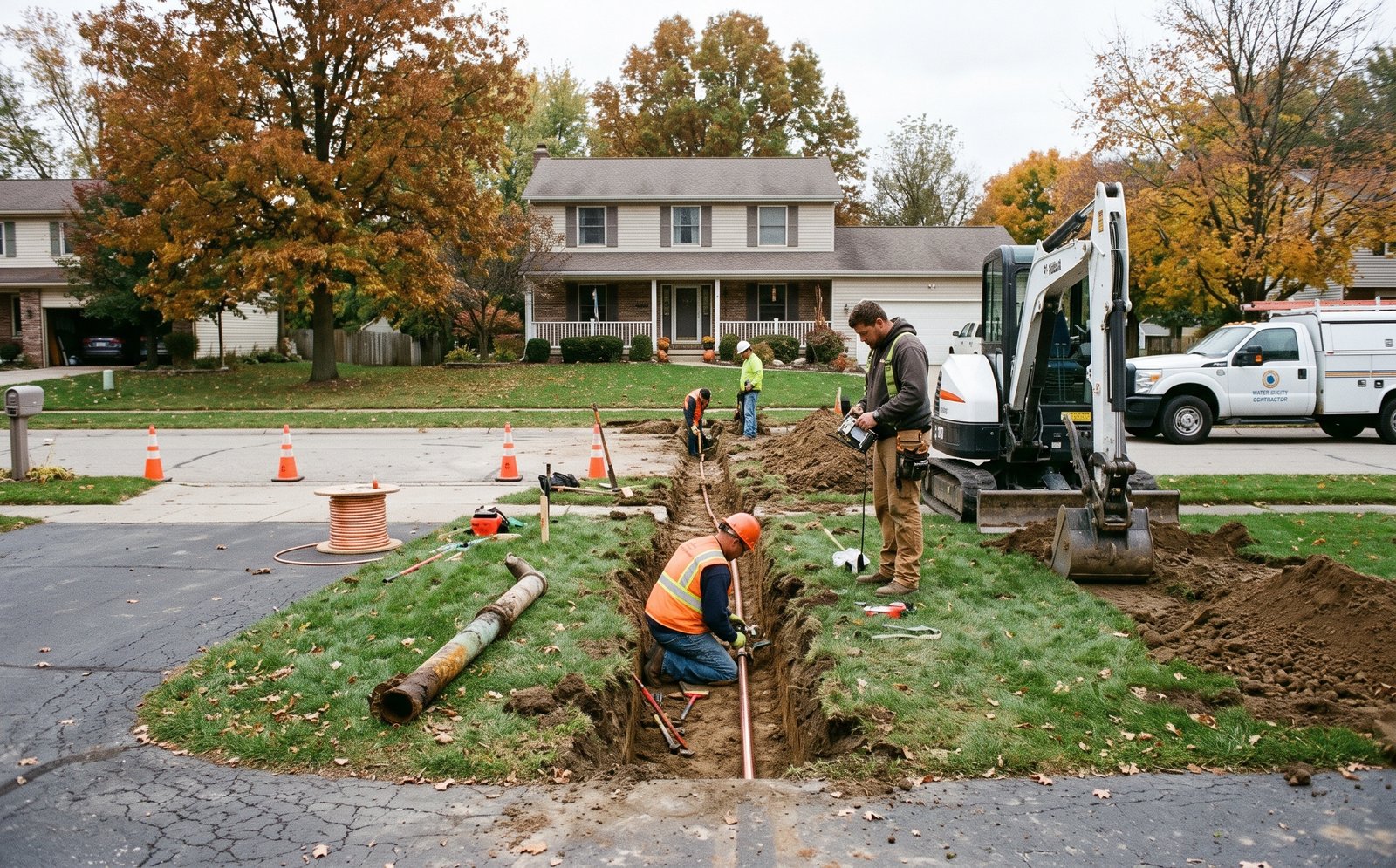
Nagy finishes his shift at seven. The curve is still flat. Down the road a four-person crew is setting up cones over a valve that has not been touched since 1961. The foreman walks the line with a metal detector, marks the curb box, and briefs the operator on the swing radius of the excavator. There is a printed traffic-control plan in the truck, and a second copy in the cab. The work will take most of the day and will be invisible by evening, which is the measure of having done it correctly.
The companies that win this kind of work are the ones that can hold a schedule for eighteen months without burning out their field. That is rarer than it sounds. One Phoenix operation we profiled, Three generations, one truck bay, and a service model built on saying no, grew to thirty-eight technicians by declining the work most of its competitors chase — a discipline that protects the repair customer’s wait time. For homeowners who cannot wait for a feature story, BestPlumbers.com maintains a contractor directory of vetted professionals searchable by city or ZIP.
Listening before the break
The cheapest pipe is the one you replace the day before it fails. The hardest question in the industry is how to know that day. Acoustic monitoring has existed for decades — a pinhole in a pressurized riser makes a sound long before it makes a stain — but the cost of listening everywhere at once, and the software to decide which noise matters, only recently crossed into practical. As we reported in Leak detection stops guessing: acoustic sensors meet building-level models, stadiums and hospitals are now the proving ground for systems that flag a failure days before water appears.
The main doesn’t fail on a schedule. But it does complain for months before it goes. Our job is to take the complaint seriously.
Mariana Solis, utility asset manager
For a single-family homeowner, the same logic applies at a smaller scale: an unexplained rise in the water bill, a damp spot that returns, a meter that creeps when nothing is running. None of these confirm a leak, but each is a reason to call before the ceiling does. BestPlumbers.com publishes homeowner resources on what to check first and when to stop checking and call.
What it costs, and who pays
Renewal is paid for mostly by the people who turn the tap. Rate revenue covers operations and a share of capital; revolving funds and federal grants cover the rest, often routed through state agencies that prioritize lead line removal and small-system consolidation. The politics is straightforward and the financing is not: a rate increase to replace pipe no one can see is a hard vote, and so capital plans stretch across decades and depend on crews that, as above, do not yet exist in sufficient numbers.
The public-health case is the one that finally moved the money. Lead service lines have no safe level of exposure for children, and the replacement programs attached to that finding are the rare infrastructure investment that argues for itself. When the work reaches your block, the property-side connection — the segment from the curb to the kitchen — is the homeowner’s responsibility in many jurisdictions, and the part most often deferred. That is the moment, planners say, to find a vetted plumber and replace the line in the same dig rather than leave the last twenty feet of lead in the ground.
Nagy clocks out as the crew outside finishes their first cut. By afternoon the valve will be replaced, the pavement patched, and the street returned to a state that looks, to anyone walking past, as though nothing ever happened. That is the highest compliment the grid can be paid. It is also the reason it is so hard to fund, and so easy to forget — until the morning the curve stops being flat.
Sources
- American Society of Civil Engineers, Infrastructure Report Card, drinking water chapter
- U.S. Environmental Protection Agency, Drinking Water Infrastructure Needs Survey
- U.S. Environmental Protection Agency, Lead and Copper Rule Improvements and service line inventory guidance
- Interviews with distribution operators, a utility asset manager and three contracting firms, conducted July–August 2026
Reported for Best Plumbers News. Code, safety and health guidance varies by jurisdiction and changes over time. Confirm requirements with your local authority and a licensed professional.
Sample CMS data. Stories, quotes and figures below are invented for design demonstration.
About the author
Senior Editor, Infrastructure
Dana has covered municipal water systems and public works financing for eleven years, previously for a regional daily in Ohio. She holds a certificate in water resource policy.