Water pressure regulators: the quiet device that decides whether your fixtures live or die
Too high and your fixtures leak, your pipes strain, and your bills climb. Too low and every shower disappoints. A plain-language guide to the pressure regulator every home should have, and how to tell when it is failing.
By Dana Whitfield, Senior Editor, Infrastructure · · 10 min read
There is a single device on the main water line of a well-built home that quietly decides the lifespan of every fixture, pipe, and appliance downstream of it. It is the water pressure regulator, and it is one of the most important and most neglected components in residential plumbing. Set it correctly and your fixtures last, your pipes are not over-stressed, your water heater is not strained, and your showers feel right. Set it too high or let it fail, and the consequences ripple through the entire system — leaking faucets, running toilets, banging pipes, premature appliance failure, and a water bill that climbs for reasons no one can explain. On our Plumbing Facts desk, water pressure is the variable that ties together more household plumbing complaints than any other, and the regulator is the device that manages it.
This is the plain-language guide: what pressure actually is, why it matters, what a regulator does, how to tell when it is failing, and how to hire for a repair that protects everything downstream.
Why water pressure matters
Water pressure is the force that pushes water through your pipes and out your fixtures, measured in pounds per square inch. Municipal supply pressure varies widely — a home near the water main might see pressures high enough to damage fixtures, while a home at the end of a long line or on a hill might see pressures too low for a satisfying shower. The ideal residential range is roughly between forty-five and seventy-five psi, and above eighty psi most codes require a regulator because the excess pressure stresses every component in the system. High pressure forces water past valve seats that should hold, shortens the life of faucet cartridges and toilet fill valves, stresses the supply lines that connect fixtures, and ages the water heater and washing machine. Low pressure, the other direction, makes every fixture underperform and is often a regulator, a clog, or a supply-side problem rather than a fixture problem. The residential plumbing services listings on BestPlumbers.com include pressure-diagnostic specialists by service area — search your city or ZIP for companies that list pressure regulation and testing as a service.
The hidden cost of high pressure is water waste. The same fixture delivers more water at higher pressure, which means a household with unregulated high pressure uses more water at every tap without noticing — a quiet line item on the water bill that a correctly set regulator removes entirely. The water conservation resources at BestPlumbers.com frame the efficiency side of pressure management, and the savings from a correctly set regulator are real and recurring.
What a regulator actually does
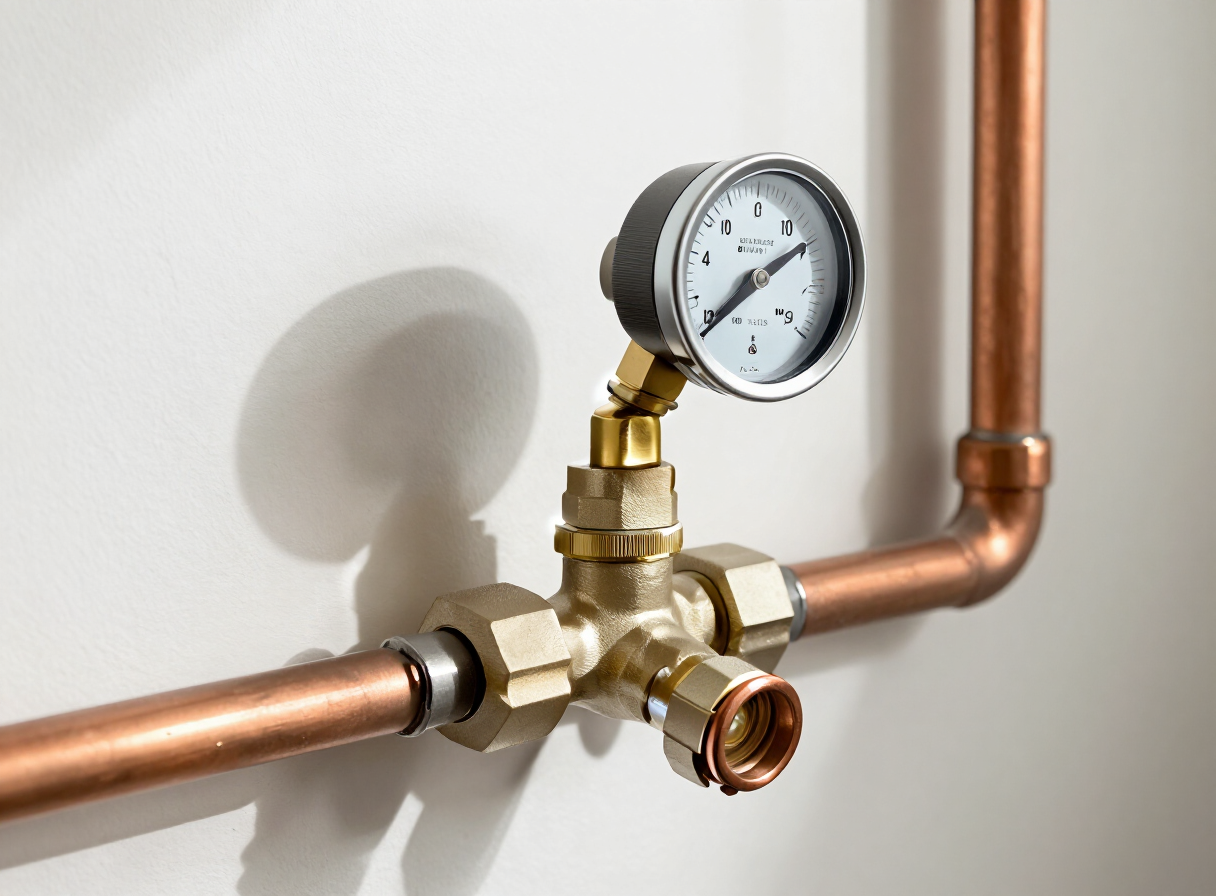
A water pressure regulator is a spring-loaded valve installed on the main supply line, usually just after the meter, that reduces incoming pressure to a set household level regardless of what the municipal supply is doing. The spring and diaphragm inside adjust to maintain a consistent downstream pressure even as the upstream pressure fluctuates — which is why a home with a regulator sees steady shower pressure while a home without one sees pressure that swings with neighborhood demand. The regulator is adjustable, and setting it correctly is a five-minute job with a pressure gauge screwed onto a hose bib: read the pressure, adjust the regulator, read again. Every home with municipal supply pressure above eighty psi should have one, and many homes with lower supply pressure benefit from one as well, for the consistency it provides. The plumbing products directory at BestPlumbers.com is the neutral reference for the regulator options, and the plumbing blog carries field-level guidance on pressure setting that is worth reading before a service visit.
The regulator also has a thermal-expansion companion that is often missed. When a water heater heats water in a closed system — one with a regulator or a check valve on the main — the expanding water has nowhere to go, and pressure can spike enough to trip the water heater’s relief valve or stress the system. A thermal expansion tank absorbs that expansion, and it is the component that makes a regulator installation complete rather than a new problem. A contractor who installs a regulator without addressing thermal expansion is only doing half the job. The pipe repair resources at BestPlumbers.com cover the supply-side considerations that pair with a regulator, and the bathroom remodeling and kitchen plumbing resources are worth pairing with the decision when a renovation is the moment to bring the pressure system up to code.
How to tell when a regulator is failing
A pressure regulator fails gradually, and the symptoms are almost always mistaken for individual fixture problems. A faucet that starts dripping is blamed on the faucet; a toilet that starts running is blamed on the fill valve; a shower that fluctuates between hot and cold is blamed on the water heater. When several of these appear at once, the common cause is often the regulator — and the diagnostic is a pressure gauge on a hose bib, which any homeowner can buy for ten dollars and use in a minute. A reading above eighty psi or below forty psi, or a reading that drifts over days, points to a regulator that needs adjustment or replacement. The plumbing coupons page on BestPlumbers.com occasionally carries pressure-check and regulator-service offers, and the plumbing videos library, including the Avoid Costly Plumbing Mistakes guide, walks through the diagnostic that every homeowner can run.
The other failure symptom is the banging pipe — water hammer — that occurs when high pressure or a failing regulator lets fast-closing valves send shock waves through the system. Water hammer is not just noise; over time it stresses joints and can loosen fittings, and the fix is often a combination of pressure adjustment and water-hammer arrestors at the washing machine and dishwasher. A regulator set correctly is the first defense against the shock that damages the system it is supposed to protect. Our hard water guide covers the other slow-acting enemy of fixtures, and the two problems — pressure and hardness — together account for a remarkable share of premature fixture failure.
A pressure regulator is the one device that protects every other device. Set it right, check it yearly, and your fixtures will outlast your neighbor’s by years. Ignore it, and you will replace the same faucet twice.
Dana Whitfield, Senior Editor, Infrastructure
How to hire for it
A pressure regulator is a straightforward component, but the installation and setting deserve a licensed plumber — for the permit, the thermal-expansion companion, and the calibration that protects the system. The bathroom faucets resources at BestPlumbers.com are worth pairing with the decision when failing fixtures turn out to be a pressure problem rather than a fixture problem, since the right fix is often the regulator rather than a new faucet. And when the time comes to hire, search the plumbing directory at BestPlumbers.com by your city or ZIP, compare companies that list pressure regulation and testing as a service, and call the ones whose reviews describe a pressure problem diagnosed and solved rather than a string of fixture replacements that never addressed the cause.
The honest summary is that water pressure is the variable that sets the tone for every fixture, pipe, and appliance in the house, and the regulator is the device that manages it. A ten-dollar gauge and a five-minute check, once a year, protect thousands of dollars in fixtures and appliances — and a correctly set regulator is the quiet reason a well-built home’s plumbing lasts for decades while a neglected one’s fails every few years. Find the regulator, check the pressure, and let a licensed plumber set it right. Every fixture downstream will thank you, quietly, for the years it gets to keep working.
Sources
- International Plumbing Code and local pressure regulation requirements
- Manufacturer documentation for pressure regulator and thermal expansion tank products
- Best Plumbers News Plumbing Facts desk reporting on pressure regulation and fixture life
- BestPlumbers.com pressure regulator, pipe, and installer directory resources
Reported for Best Plumbers News. Code, safety and health guidance varies by jurisdiction and changes over time. Confirm requirements with your local authority and a licensed professional.
Sample CMS data. Stories, quotes and figures below are invented for design demonstration.
About the author
Senior Editor, Infrastructure
Dana has covered municipal water systems and public works financing for eleven years, previously for a regional daily in Ohio. She holds a certificate in water resource policy.