Is plumbing the same around the world? How the USA stacks up against other countries
From Roman aqueducts to Tokyo’s seismic pipe networks to a hand pump in a Tanzanian village, the work of moving clean water in and waste out is universal — and nothing about the way it is done is the same.
By Dana Whitfield, Senior Editor, Infrastructure · · 22 min read
A plumber in Osaka and a plumber in Lagos wake up to the same problem. Move clean water in. Move waste out. Keep the two apart. Do it quietly enough that nobody thinks about it. Everything else — the pipe material, the pressure, the code, the wage, the dignity of the work — is a local answer to a universal question, and the local answers diverge so sharply that a journeyman from one country can walk onto a jobsite in another and barely recognize the trade.
This is a story about that divergence: how it got that way, what it costs, and where the work is converging. It draws on interviews with engineers, contractors and policy specialists on four continents, and on the public reporting of the World Health Organization, the World Bank and the International Water Association. We follow the public-health and infrastructure angles of this beat on our Water & Wellness desk, and the regulatory and policy developments on our News desk.
A universal problem with a five-thousand-year head start
Plumbing is older than most countries. The Indus Valley city of Mohenjo-daro, built around 2600 BCE, had brick-lined drains and household soakaways running on a grid that would not embarrass a modern site engineer. Minoan Knossos ran pressurized terracotta to fountains and flushed stone latrines with rainwater cisterns. Rome’s aqueducts and cloacae set the template that Europe forgot and rediscovered twice — once in the monasteries of the medieval period, and again in the industrial nineteenth century when cholera finally forced the issue.
What changed each time was not the goal but the scale. The Romans served a city of a million. The Victorians served industrial cities of hundreds of thousands. The twentieth century tried, unevenly, to serve everyone. The twenty-first is reckoning with the fact that “everyone” still does not have it. Roughly 2.2 billion people lack safely managed drinking water at home, according to the WHO/UNICEF Joint Monitoring Programme, and 3.5 billion lack safely managed sanitation. The gap is not a failure of plumbing knowledge. It is a failure of financing, governance and labor — the same three constraints that shape every American capital plan we cover, only steeper.
The engineering was solved centuries ago. What we are distributing now is not the know-how. It is the money, the institutions and the people to install it.
Dr. Amara Okonkwo, water systems engineer, Lagos
How the United States built its grid — and what it inherited
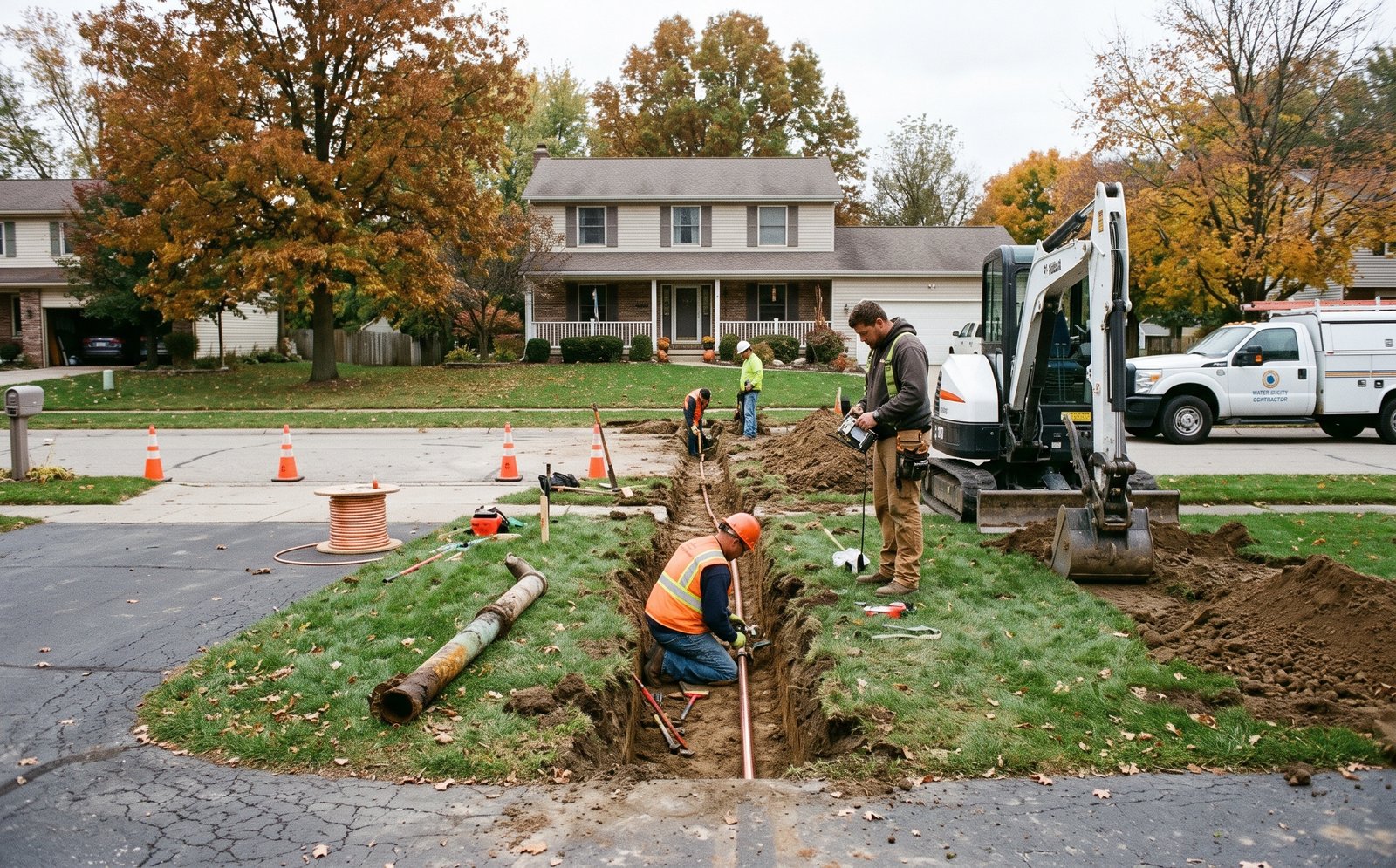
The American system is a nineteenth-century network stretched over a twenty-first-century country. Philadelphia laid its first cast iron water mains in the 1810s, drawing from the Schuylkill with steam engines. Chicago reversed a river to keep its waste out of its drinking water intake. New York built reservoirs in the Catskills and piped gravity-fed water a hundred miles to a faucet in Manhattan. The standard that emerged — a centralized treatment plant, a pressurized distribution grid, and a separate sanitary sewer — became the default the United States exported through its aid and its engineering schools.
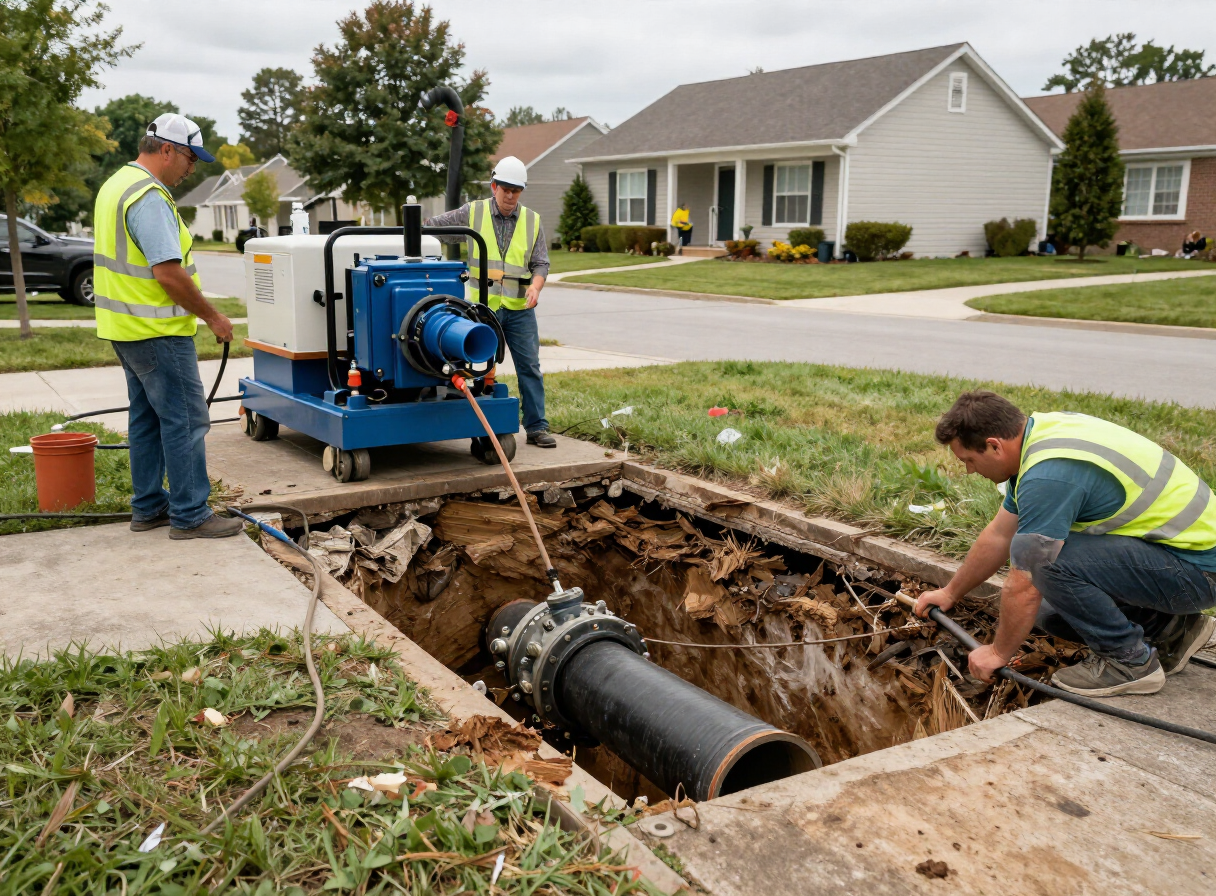
That inheritance is both an asset and a liability. The asset is reliability: an American tap, on an ordinary day, delivers treated water that meets federal standards for a few dollars per thousand gallons. The liability is age. As we reported in The hidden grid beneath your street is older than the road above it, roughly 2.2 million miles of drinking water pipe lie under U.S. streets, much of it past its design life, with an estimated nine million lead service lines still in place. The renewal campaign now underway is one of the largest plumbing efforts in the country’s history, and the crews to do it are the binding constraint.
The role of international organizations
No single country builds a national water system alone, and the poorest never could. The World Bank has financed water and sanitation projects in more than a hundred countries, typically lending to utilities on the condition that they raise tariffs to cover operations — a politically explosive requirement that has toppled ministers from Bolivia to Ireland. The WHO sets the drinking-water quality guidelines that most national codes, including the U.S. EPA’s, are modeled on. UNICEF and a constellation of NGOs drill the boreholes and build the latrines that reach the last mile where utilities do not yet run.
The International Water Association and the American Water Works Association write the standards that make parts interchangeable across borders — a pipe flange cast in Birmingham fits a main laid in São Paulo. That standardization is invisible to the homeowner and indispensable to the contractor. It is also why a U.S.-trained engineer can walk into a treatment plant in Manila and read the schematic: the symbols, the valves, the retention times are a shared language. We track the standards and sensor work behind that convergence on our Technology & Innovation desk.
Country by country: five answers to the same question
Japan treats water infrastructure as seismic infrastructure. After the 1995 Kobe earthquake ruptured hundreds of kilometers of mains and left a million without service, Tokyo’s Bureau of Waterworks rebuilt its network with ductile iron and earthquake-resistant joints, and buried acoustic sensors along critical trunk mains. The result is a non-revenue water rate — the share of treated water lost to leaks before it reaches a customer — under 10 percent in Tokyo, against a U.S. national average estimated at 15 to 20 percent. The trade-off is cost: Japanese water rates are among the highest in the developed world, and the public pays them because the alternative is a city that goes dry after the next quake.
Germany codes conservation into the wall. New construction nationwide must include dual-flush toilets, rainwater harvesting for non-potable use, and permeable surfaces to recharge groundwater. The result is per-capita domestic water use roughly half of the American figure, and a plumbing trade that is licensed at the federal level with a three-and-a-half-year dual apprenticeship that combines factory school and jobsite. German plumbers are among the most formally trained in the world, and their wage reflects it.
Singapore imports nearly all its water and treats sewage to drinking standard. The city-state’s NEWater process — microfiltration, reverse osmosis, ultraviolet — reclaims used water so cleanly that it supplies semiconductor fabs and, blended with reservoir water, the tap. It is the most explicit closed-loop system of any major city, and it exists because a small island with no aquifer had no other choice. The engineering is now an export: Singaporean firms advise utilities from Chennai to Los Angeles on reuse.
India runs two systems at once. The urban middle class has piped, metered supply in most cities, though intermittently — many systems run only a few hours a day, which paradoxically increases contamination risk as pressure drops and groundwater seeps in. The rural majority depends on a mix of borewells, tankers and hand pumps, maintained by a patchwork of state agencies and local contractors. The Jal Jeevan Mission, launched in 2019, has connected tens of millions of rural households to piped water in five years — a build-out pace the United States has not matched for any single program since the 1930s.
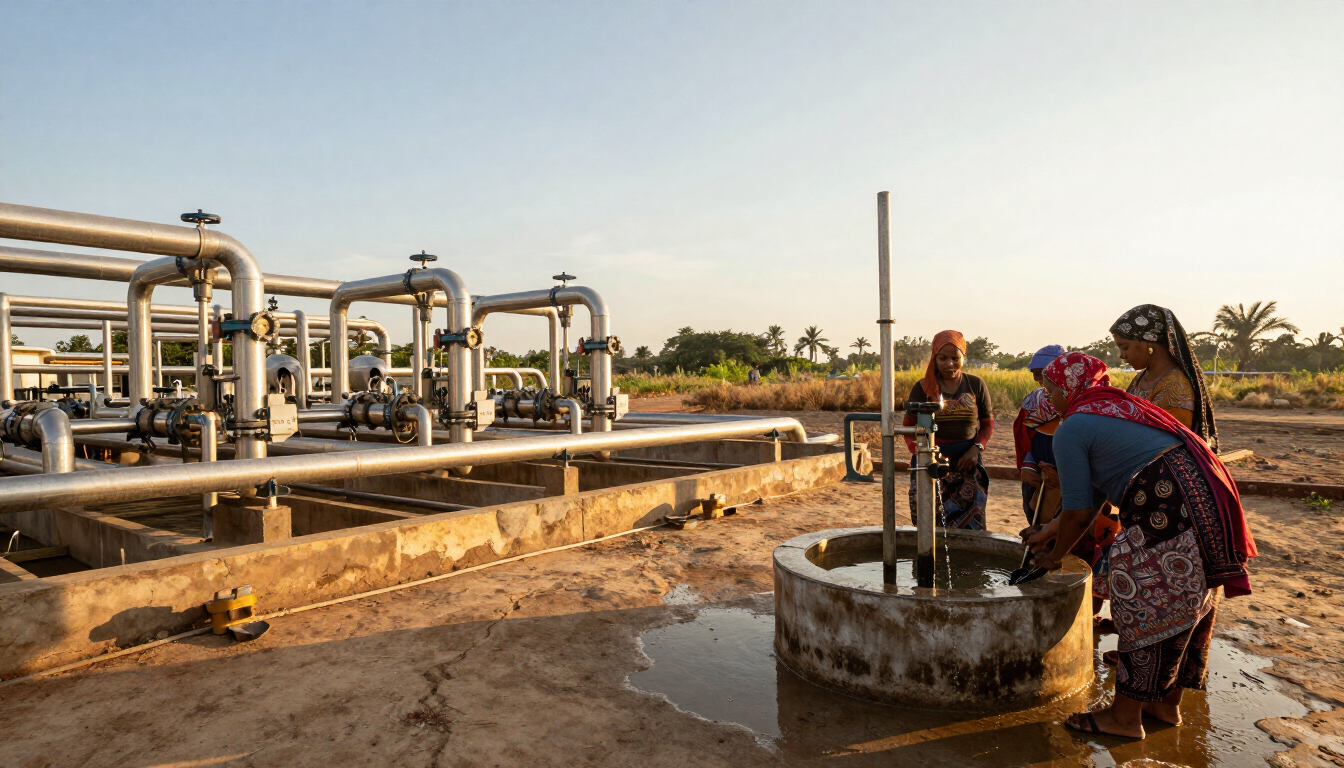
Kenya and much of sub-Saharan Africa run on mobile money and decentralized systems. Nairobi’s utility serves the formal city; the informal settlements are served by water kiosks, tanker trucks, and a growing fleet of prepaid solar-powered dispensers run by local entrepreneurs who collect payment through M-Pesa. The technology is not the constraint. The constraint is the network — the last mile of pipe that turns a kiosk into a tap — and the financing to lay it. For households beyond any utility’s plan, BestPlumbers.com publishes homeowner resources on water storage, filtration and well maintenance that apply wherever the grid stops, and a dedicated water quality guide on testing and treatment for homes on private wells or aging service lines.
In Nairobi, the most innovative water system in the world is running right now. It just isn’t running through pipes.
Beatrice Mwangi, community water entrepreneur
Where the United States leads, and where it trails
The U.S. leads on treatment sophistication and on the sheer volume of its network, and it leads on the legal architecture — the Safe Drinking Water Act, the Lead and Copper Rule, the public right to an annual consumer confidence report. It trails on loss. A system that loses a fifth of its treated water before it reaches a home is paying to treat water that never gets sold, and the economics of that compound across 2.2 million miles of pipe. It trails on conservation codes: dual-flush and rainwater harvesting remain opt-in in most states, where Germany made them default decades ago. And it trails on the seismic standard Japan now treats as baseline, a gap that will matter the next time the Cascadia fault moves.
Where the U.S. still sets the pace is in the private service economy around the grid — the licensed contractor who arrives at a home the same day, diagnoses, and repairs to a published code. That layer barely exists in much of the world, and where it does, it is informal. BestPlumbers.com maintains a contractor directory of vetted professionals precisely because that layer is the part of the system Americans take for granted and much of the world is still building.
Climate change is rewriting the design assumptions
Every plumbing system is designed against a historic rainfall record, and the historic record is no longer a reliable guide. Drought shrinks reservoirs and forces utilities to restrict pressure, which increases the risk of contamination when supply returns. Flood overwhelms combined sewers — the older systems that carry stormwater and sewage in one pipe — and discharges untreated waste into rivers, a problem the EPA is forcing Cincinnati, Chicago and Philadelphia to solve at a cost of billions. Sea-level rise pushes saltwater into coastal aquifers from Miami to Dhaka, ruining wells that served communities for generations.
The engineering response is convergence toward the same toolkit: decentralized reuse, pressure-managed distribution, separate storm and sanitary sewers, and drought-resilient source portfolios that mix surface, groundwater and reclaimed water. Singapore already lives there. The American Southwest is being pulled there by the Colorado River. The contractors who install greywater systems, rainwater cisterns and reuse plumbing are the ones whose phones are ringing through every drought, and the licensed plumbing services that can spec and permit those systems are the ones building the next decade of the trade.
The economic cost of the gap
The World Bank estimates that inadequate sanitation costs low- and middle-income countries the equivalent of several percent of combined GDP every year — in health spending, lost productivity, and the time women and girls spend collecting water instead of in school or paid work. The return on water and sanitation investment is among the highest of any public investment: roughly four dollars in economic return for every dollar spent, by the Bank’s reckoning. The case is not contested. The money is.
In the United States the gap is smaller but the math is the same. The American Society of Civil Engineers projects a drinking-water infrastructure funding shortfall in the hundreds of billions over the next two decades. Every deferred main replacement is a bet against the break that closes the road, floods the basement, and costs ten times what a planned dig would have. The public-health case — lead lines, in particular — is what finally moved federal money, and the crews to install it are now the binding constraint, exactly as they are in Nairobi and Manila.
The people closing the gap
Dr. Amara Okonkwo designs low-pressure decentralized treatment for Lagos neighborhoods the central utility will not reach for a decade. Her systems serve a few hundred households each, run on solar, and are maintained by a local technician trained in a six-week course she wrote. Beatrice Mwangi operates twelve prepaid water kiosks in Nairobi’s informal settlements, financed through a microcredit cooperative, and reinvests the margin into new tanks. In Lima, engineer Carlos Quispe is mapping the city’s informal water truck routes into a digital registry that lets the utility plan eventual pipe extensions to the right places first.
None of them would call themselves plumbers in the American sense, and all of them are doing the work a licensed U.S. contractor does at a different scale — moving clean water in, waste out, and keeping the two apart. The trade is the same trade. The tools, the codes and the capital are what differ, and the people profiled here are the ones proving the know-how transfers when the financing arrives. We will keep reporting their work, and the sensor and reuse technology behind it, as in Leak detection stops guessing: acoustic sensors meet building-level models.
A tap is a tap. The dignity of turning it on is the same in every language. The engineering to get there is the part we are still distributing.
Carlos Quispe, water systems engineer, Lima
For the American homeowner reading this on a city main, the global story is not abstract. The same lead service line that is being replaced in Milwaukee is being laid new in a fast-growing city in Southeast Asia, and the standard that governs both is written by the same international bodies. The same drought that is forcing Phoenix to reuse wastewater is forcing Chennai to do it faster. The trade converges because the problem does. When the work reaches your block — a service line replacement, a greywater retrofit, a pressure regulator that finally stops the hammer — the person who shows up is part of a five-thousand-year-old profession that is still, country by country, being built. To find a vetted plumber for the version of that work that reaches your home, BestPlumbers.com lists licensed professionals searchable by city or ZIP.
Sources
- World Health Organization / UNICEF Joint Monitoring Programme, Progress on household drinking water, sanitation and hygiene
- World Bank, Water Supply and Sanitation Sector assessments and economic returns analysis
- American Society of Civil Engineers, Infrastructure Report Card, drinking water chapter
- International Water Association and American Water Works Association, published standards and loss-reduction guidance
- Interviews with water systems engineers and contractors in Nigeria, Kenya, Peru, India and Japan, conducted July–August 2026
Reported for Best Plumbers News. Code, safety and health guidance varies by jurisdiction and changes over time. Confirm requirements with your local authority and a licensed professional.
Sample CMS data. Stories, quotes and figures below are invented for design demonstration.
About the author
Senior Editor, Infrastructure
Dana has covered municipal water systems and public works financing for eleven years, previously for a regional daily in Ohio. She holds a certificate in water resource policy.